CERTIFICATE S4


ADI JOURNAL ON RECENT INNOVATION (AJRI)
AJRI implements a systematic publication workflow designed to ensure transparency, editorial accountability, independent peer review, and high-quality scholarly publishing. The overall editorial and publication process is estimated to take 12 weeks, excluding author revision periods.
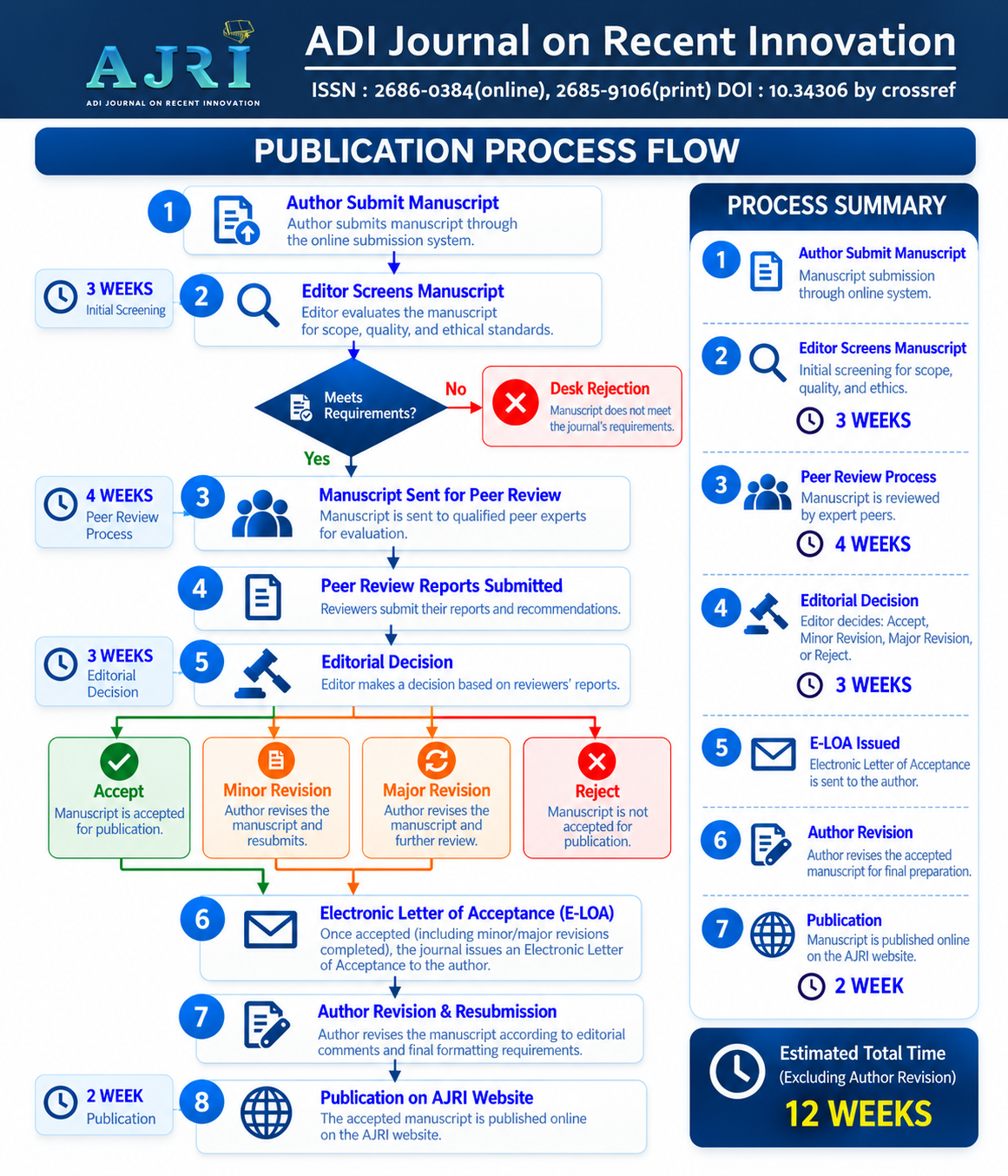
Figure 1. Publication Process Flow of ADI Journal on Recent Innovation (AJRI)
The publication process consists of eight interconnected stages, beginning with manuscript submission and concluding with online publication. Each manuscript undergoes editorial evaluation, expert assessment, and quality assurance procedures. The following sections explain the responsibilities, activities, and estimated processing periods associated with each stage.
The publication process begins when an author submits a manuscript through AJRI's online submission system, powered by Open Journal Systems (OJS). Before submission, authors are required to ensure that their manuscripts comply with the journal's Focus and Scope, Author Guidelines, formatting requirements, and ethical publication standards.
Authors must provide complete manuscript information, including the article title, abstract, keywords, author affiliations, and supporting documents when required. After successful submission, the manuscript is registered in the editorial system and forwarded to the editorial team for initial assessment.
◴ Estimated Duration: 3 Weeks
During the initial screening stage, the editorial team evaluates the submitted manuscript to determine whether it meets AJRI's academic, technical, and ethical requirements. This preliminary assessment covers the relevance of the research topic, originality, scientific contribution, methodological appropriateness, manuscript structure, and compliance with the journal's formatting guidelines.
The editorial team also assesses potential publication ethics issues, including plagiarism, duplicate submission, and incomplete manuscript information. Manuscripts that satisfy the requirements proceed to external peer review. Manuscripts that fail to meet essential requirements may receive a desk rejection without undergoing further review. This initial screening process is estimated to take approximately three weeks.
◴ Estimated Duration: 4 Weeks
Manuscripts that successfully complete editorial screening are assigned to qualified reviewers with expertise relevant to the submitted research. AJRI applies a double-blind peer review mechanism to maintain impartiality and minimize potential bias during manuscript evaluation.
Reviewers evaluate the manuscript's originality, theoretical contribution, research design, methodology, analytical accuracy, interpretation of findings, and relevance of references. They also identify potential weaknesses and provide constructive recommendations for improving scientific quality. The estimated duration for this peer review stage is approximately four weeks, depending on reviewer availability and manuscript complexity.
Upon completing their evaluations, the assigned reviewers submit detailed assessment reports through the OJS platform. These reports contain feedback on the manuscript's strengths, methodological limitations, theoretical implications, presentation quality, and areas requiring revision or clarification.
Reviewers may recommend acceptance, minor revision, major revision, or rejection based on their findings. The editorial team subsequently examines the recommendations and determines whether the manuscript requires additional assessment or can proceed to editorial decision-making. Submission of reviewer reports forms part of the peer review process and does not have a separate fixed duration in the estimated timeline.
◴ Estimated Duration: 3 Weeks
After reviewing the assessment reports and recommendations provided by peer reviewers, the editor determines the appropriate editorial decision. This decision considers the manuscript's originality, scientific quality, methodological reliability, relevance to the journal, and compliance with publication ethics. The editorial decision stage is estimated to take three weeks and may result in one of four outcomes.
The manuscript meets the journal's scientific and editorial requirements and is considered suitable for publication. It proceeds to final acceptance documentation and production preparation.
The manuscript requires limited improvements, such as clarifying arguments, correcting references, improving presentation, or addressing specific reviewer comments. Authors must complete the requested changes before the manuscript can receive final acceptance.
The manuscript requires substantial improvements involving its methodology, data analysis, theoretical framework, interpretation, or overall scientific contribution. The revised manuscript may undergo additional review before an acceptance decision is issued.
The manuscript is considered unsuitable for publication because of significant academic, methodological, ethical, or scope-related deficiencies. The decision and relevant reviewer feedback are communicated to the corresponding author through OJS.
Once the manuscript has successfully completed peer review and all required scientific revisions have been approved, AJRI issues an Electronic Letter of Acceptance (E-LOA) to the corresponding author. The E-LOA serves as formal confirmation that the manuscript has fulfilled the journal's editorial requirements and has been accepted for publication.
The acceptance letter may include information such as the manuscript title, author identity, journal name, and acceptance confirmation. Issuance of the E-LOA does not mean that the article has already been published, as final editing, formatting, and publication preparation may still be necessary.
Authors are responsible for addressing the recommendations and editorial comments received during the review process. Manuscripts requiring minor or major revisions must be corrected and resubmitted through OJS for verification before formal acceptance can be granted. Depending on the revisions requested, authors may need to provide a response-to-reviewers document explaining how each recommendation has been addressed.
Following formal acceptance, authors may also be required to complete final formatting, metadata verification, proofreading corrections, and other production-related adjustments. The revision period varies depending on the complexity of the requested changes and the responsiveness of the authors. Therefore, author revision time is excluded from the estimated 12-week publication timeline.
◴ Estimated Duration: 2 Weeks
After final acceptance and manuscript preparation, the article enters the publication production stage. The editorial and production teams conduct copyediting, layout editing, proofreading, and metadata verification to ensure that the manuscript meets AJRI's publication quality standards.
The final article is prepared for online dissemination through AJRI's official OJS website. Relevant publication information, including article metadata and DOI registration where applicable, is finalized during this stage. The estimated publication preparation period is approximately two weeks. Once published, the article becomes available to readers in accordance with the journal's open-access policies.
AJRI's editorial and publication process is designed around an estimated 12-week processing period. This estimate includes initial editorial screening, external peer review, editorial decision-making, and final publication preparation.
| Publication Stage | Duration |
|---|---|
| Initial Editorial Screening | 3 Weeks |
| Peer Review Process | 4 Weeks |
| Editorial Decision | 3 Weeks |
| Publication and Production | 2 Weeks |
| Total Estimated Duration | 12 Weeks |
Note: The estimated duration excludes author revision periods. Actual processing times may vary depending on reviewer availability, manuscript complexity, additional review rounds, and editorial requirements.
Through a transparent and structured publication workflow, ADI Journal on Recent Innovation (AJRI) is committed to maintaining high standards of academic integrity, editorial independence, and scientific quality. Each stage of manuscript assessment and publication is designed to support fair evaluation, constructive scholarly feedback, and the responsible dissemination of innovative research.
CERTIFICATE S4
Template

SUPPORT BY

SUBMISSION

References


 |
|
||||||||||||||